Introduction
Basic Conditions of Philosophical Discussion
1. Matter, Not Person
Philosophical criticism addresses statements, arguments, and concepts – never persons. Psychological attributions, motive imputation, or moral evaluations do not substitute for argument. This separation belongs to the oldest methodological insights of philosophy and forms a prerequisite for rational discourse1.
2. Logic as Foundation
Without elementary logic, there are no arguments. The law of non-contradiction holds: Two mutually contradictory statements about the same object in the same sense cannot both be true simultaneously. Arguments must be comprehensible, logically structured, and testable.
If a claim leads to a contradiction, either it or its premises are false. Those who accept contradictions abandon justifiability and leave the framework of rational discussion.
3. Error Culture and Fallibilism
When errors are pointed out, they count as occasions for correction, not as personal attacks. Those who argue philosophically accept the possibility of error and the obligation to revise their own positions. A discussion without error culture degenerates into defense of preconceived opinions.
Basic fallacies should not be repeated after being pointed out: straw man arguments, ad hominem attacks, circular reasoning, category errors, or mere appeals to authority. Those who permanently repeat the same error show that recognition is not the goal2.
4. Critical Rationalism as Methodological Basis
The foundation of philosophical knowledge is hypothetical realism: Statements about the world claim truth but remain fundamentally fallible. Knowledge emerges through hypotheses that are exposed to criticism.
Statements with truth claims must be falsifiable in principle. Where falsification is deliberately excluded or replaced by immunization strategies, ideology emerges instead of philosophy3.
5. Truth and Realism
For statements referring to reality, the correspondence theory of truth forms the viable foundation: True is what corresponds with reality; false is what contradicts it.
In formal domains such as logic and mathematics, strict consistency applies. Metaphysical systems must be compatible with empirical findings as well as with other secured knowledge. Models that collide with well-confirmed empirical evidence or their own formal framework require revision.
Relativistic, nihilistic, or purely consensus-based concepts of truth undermine this foundation and make argumentative philosophy impossible4.
6. Subject Knowledge and Professional Responsibility
Philosophy does not require an academic certificate, but it does demand a minimum of conceptual foundations: critical rationalism, falsification, immunization strategies, logical contradiction, typical fallacies, and the correspondence concept of truth.
Those who argue with technical terms, theories, or names assume responsibility for their proper use. Those who argue with specialized fields – such as evolutionary theory, neuroscience, quantum physics, or mathematical logic – must familiarize themselves sufficiently to understand the relevant arguments. Citing concepts or authorities without understanding them is not an argument but a rhetorical device.
Scope and Criticism
The standards mentioned form the tacit prerequisite of every discussion that claims to practice philosophy. They are not renegotiated in every text but presupposed.
The standards themselves remain open to criticism. Such criticism, however, must meet the same standards: realism, truth-aptness, logic, falsifiability, substantive criticism, and argumentative integrity.
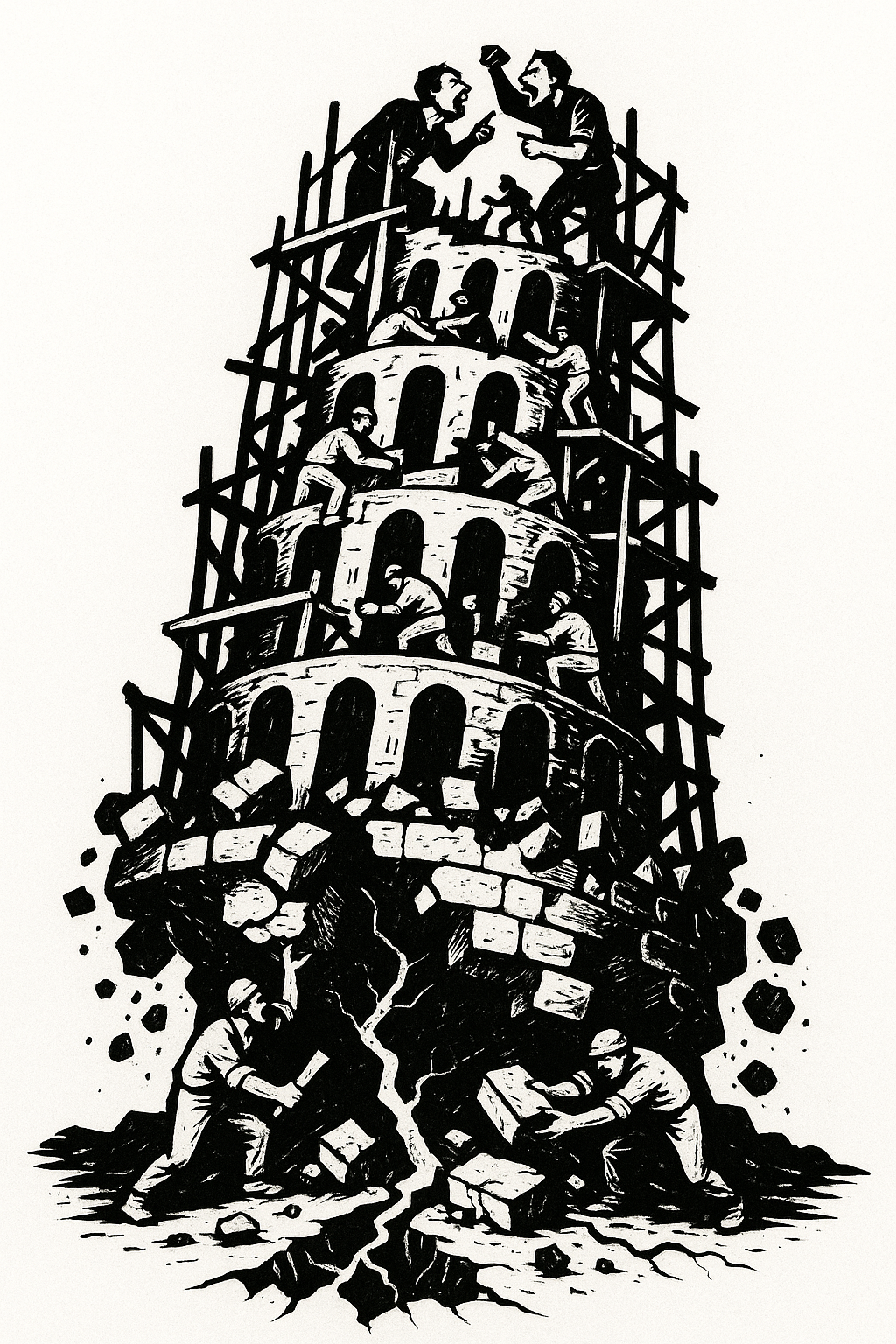
Only under these conditions does philosophical discussion deserve its name – and opens the possibility of genuine knowledge acquisition instead of a Babylonian confusion of voices.
Footnotes
Cf. Aristotle, Topics; also Arthur Schopenhauer, The Art of Being Right (as a negative catalog of rhetorical tricks). ↩︎
Cf. John Stuart Mill, On Liberty (discussion ethics); also Irving M. Copi, Introduction to Logic. ↩︎
Karl Popper, The Logic of Scientific Discovery; Hans Albert, Treatise on Critical Reason. ↩︎
Cf. Popper, Objective Knowledge; also Hilary Putnam, Reason, Truth and History (critical of relativism). ↩︎